Exploring the Enchanting Marquesas Islands in South Pacific: A Journey Through Nature, Culture, and Healing
- sheri1943
- Jul 5
- 13 min read
Updated: Jul 8

The Marquesas Islands in French Polynesia offer a unique blend of raw natural beauty, rich history, and warm local culture. These remote islands, far from the usual tourist trails, invite travelers to explore rugged landscapes, vibrant marine life, and heartfelt human connections. Our journey took us through Hiva Oa, Tahuata, Fatu Hiva, and Nuku Hiva, where we experienced unforgettable hikes, rigorous mountain-biking, snorkeling and scuba diving, and encounters with generous locals, including a remarkable naturopathic doctor using traditional remedies. This post shares our experiences, practical travel tips, and insights into the islands’ culture and geography.

The Marquesas Islands: Geography and Population
The Marquesas archipelago consists of 12 volcanic islands scattered over 1,000 kilometers in the South Pacific. Only six of these islands are inhabited, with a combined population of around 9,000 people. The main islands we visited include:
Nuku Hiva: The largest island, with about 3,200 residents. It has an airport, making it the primary gateway to the Marquesas.
Hiva Oa: Home to roughly 2,200 people and also served by an airport. Known for its cultural heritage and as the final resting place of artist Paul Gauguin.
Fatu Hiva: The southernmost inhabited island, with around 600 residents. It has no airport, accessible only by boat.
Tahuata: A smaller island near Hiva Oa, with about 600 inhabitants and no airport.
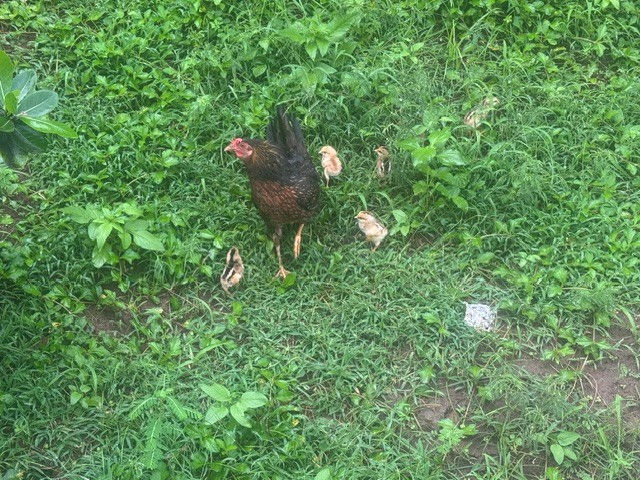
The islands’ rugged terrain and limited infrastructure mean travel between them often involves boats or small planes, adding to the sense of adventure, and keeping them more pristine and unspoiled. It also helps preserve the wild goat, chicken, and pig populations of the island.


Hiking Through Dramatic Landscapes
The Marquesas are famous for their steep cliffs, deep valleys, and dense tropical forests. Hiking here is challenging but rewarding, offering spectacular views and a chance to connect with nature. Fruit trees were abundant along many of the trails we hiked, along with gorgeous tropical flowers and flowering trees.
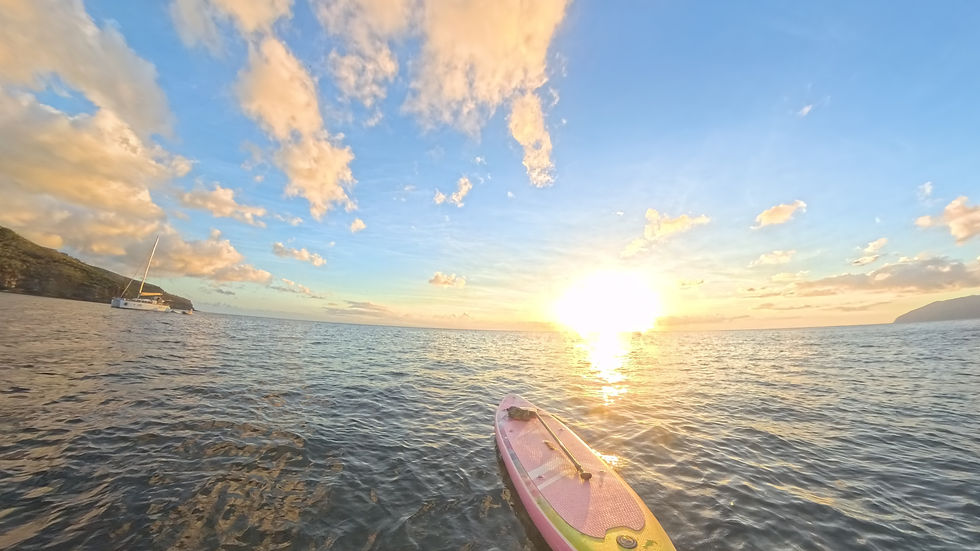
On Nuku Hiva, we first anchored in Baie de Taiohae where we hiked around the bay and visited a couple of the restaurants and stores ("magasins") there. They do have a Pearl Resort with a pool, a very nice restaurant and about six or eight little bungalows set over the cliffs with stunning views. We met several locals, mostly from France, who had come to Nuka Hiva and never went back to France. After a few days we moved our boat 3 miles north to Daniel’s Bay (locally called, Hakatea Baie), a stunning inlet surrounded by towering cliffs and vibrant greenery.
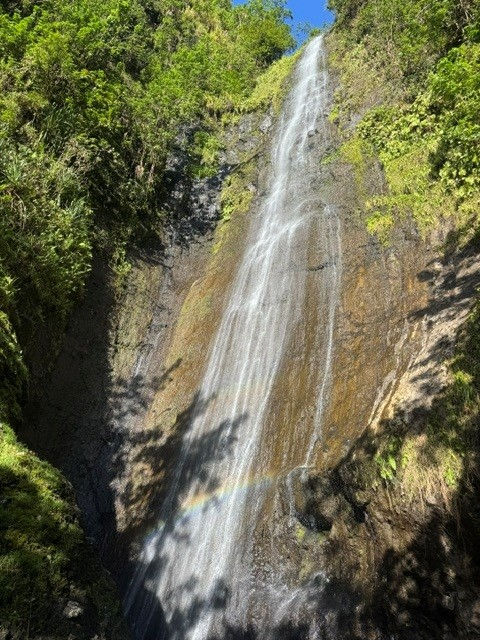
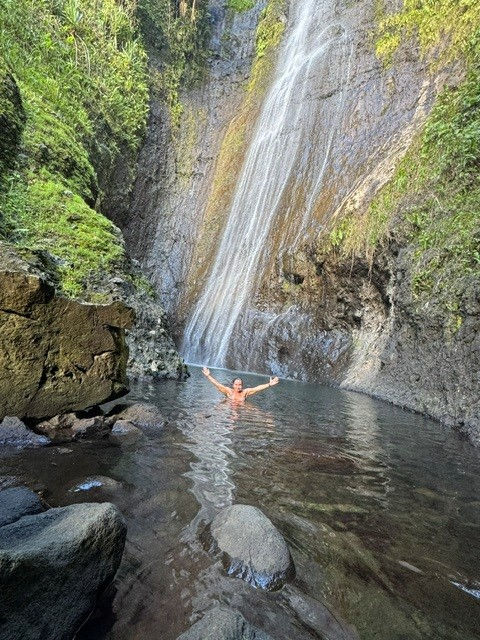
We hiked the famous waterfall trail from the white sand beach (one of the few in Marquesas), around to the other side of the bay and up to the waterfall, a total of 8 miles. We passed the little development with twelve houses and met several of the locals that live there, including Monette, who was very generous with her garden. Some use their small houses as a second home (beach house) and host cruisers and a few tourists for a lunch at their homes near the beach, usually after they have done the waterfall hike. The price for a good warm local lunch of fresh tuna steak, baked breadfruit, fried plantain, papaya salad and fresh lemonade was $16 per person. We were also given nine huge pamplemousses (grapefruits), which are literally the best I have had in my life: very sweet, white pulp and very few seeds. The hike involved no major steep ascents and descents but tumbled volcanic rocks and boulders with some muddy patches and several river crossings with knee-deep water. We hiked past many ancient ruins from before the Europeans came to French Polynesia, when reportedly there were 20,000 native inhabitants here in the valley. The waterfall at the end was tucked back in among boulders and sheer cliffs with many overhangs with a warning sign on the trail that advised to beware of the dangerous falling rocks. (Rob and I jogged that part of the trail.) Of course Rob and I had to swim into the waterfall for the full experience!
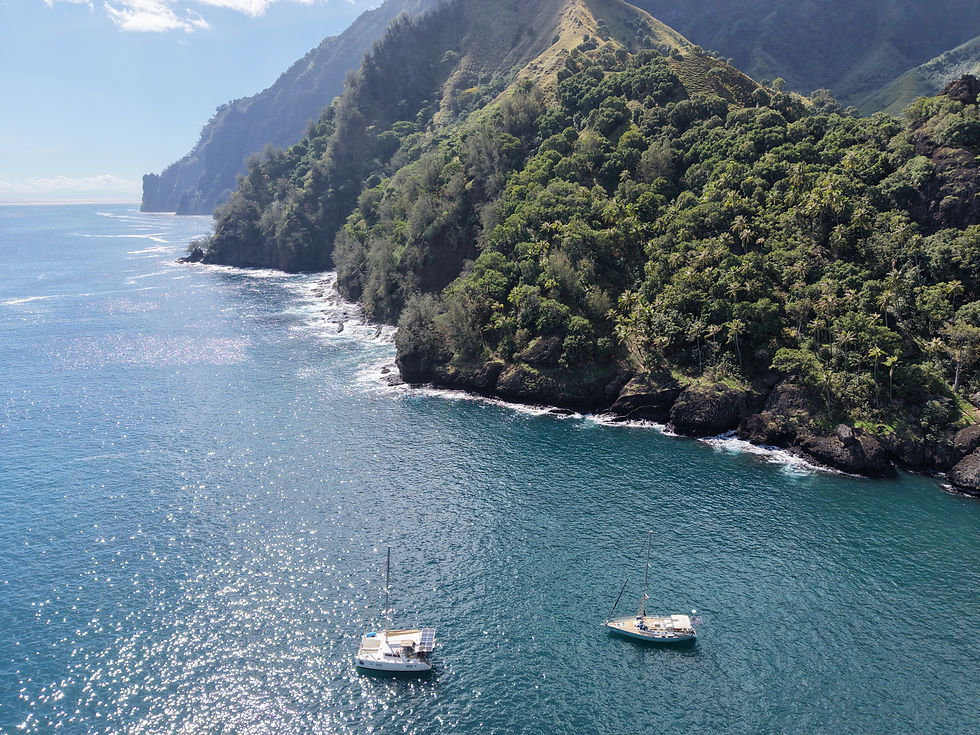
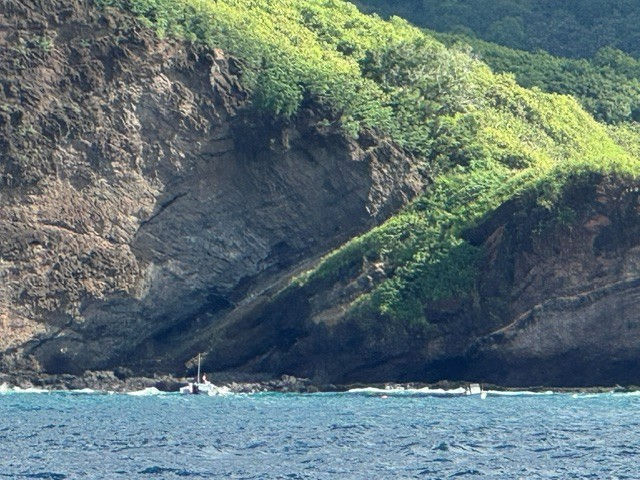
In Fatu Hiva, the Bay of Virgins (Baie des Vierges) captivated us with its pristine beauty. It truly is one of the most beautiful places we have ever been with steep cliffs dropping off into the sea and huge boulders perched precariously on others with lush vegetation on the mountainsides and valleys. The trail/road from Baie of Vierges to Omua Bay is 10 kilometers, so Rob and I thought it would be a nice, strenuous mountain-bike work-out. Little did we know that the paved road was steeper than the hill known as "The Beast" in Ironman St. Croix, and continued for almost the full 5 miles up and over, with switchbacks all along the way and deadly drop-offs on the sides. Needless to say, we hiked our bikes much of the way up the steeper portions. The views from so many of the cliffs were phenomenal and we could see our catamaran nestled into the bay amongst a few other boats.






In Tahuatu, in Hanamoenoa Anchorage, we found the water to be a bit clearer and there was a sandy beach to go to by dinghy, but we had to anchor it out due to the swell. Rob and I hiked up the "trail" from the beach to the top of the cliff overlooking the bay. This was much more of a goat trail than a people trail since it was quite steep and we ascended and descended often on all fours, holding onto rocks and shrubs for support as the gravel and scree slid out from under us. Rob was stung by several wasps at the beginning of the hike, making us avoid the thicker vegetation areas.


On Hiva Oa we anchored at Tahaujku inner anchorage and checked in to French Polynesia We hiked into town, about three miles, but many times locals would stop and give you a ride. One day we hiked up to the petroglyph rock which is about five mile hike. The rock was mismarked on the map so we hiked past it up into the jungle and found an old uninhabited stone village that was amazing. We finally found the petroglyph with what appeared to be alien type figures on it carved in the stone, with what tool I have no idea. Very interesting!

We rented a car one day to tour the island and do a hike from Hanaiapa to Hanatekuua. We met lovely people, Fred and Jean Ives on the beach at Hanaiapa Bay where there were only two boats anchored and the water was clearer than at the main Hiva Oa Bay at Tahauku. We did a 5k hike, though the trail continued on. it had magnificent views and some steep climbs and descents. This trail, as many on the islands, had likely been in use for hundreds of years. There were lots of goats scrambling along the rock cliffs, tempting Rob.


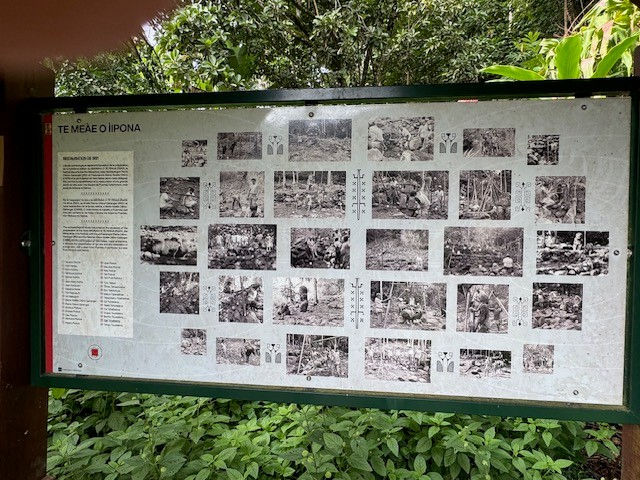

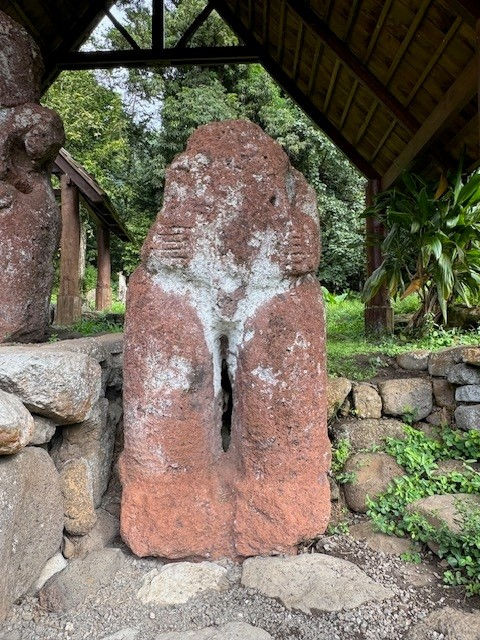


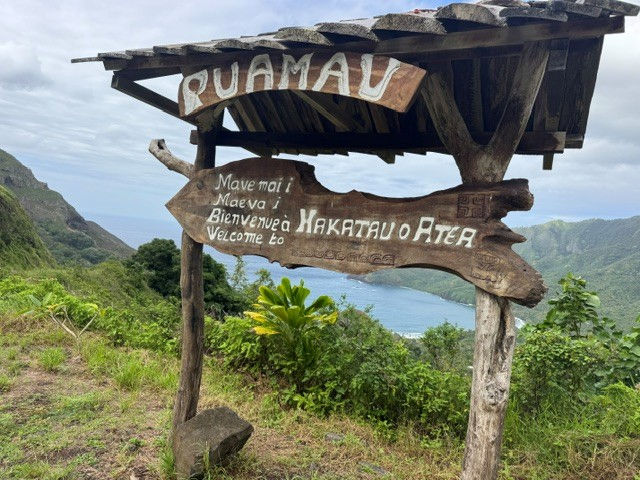
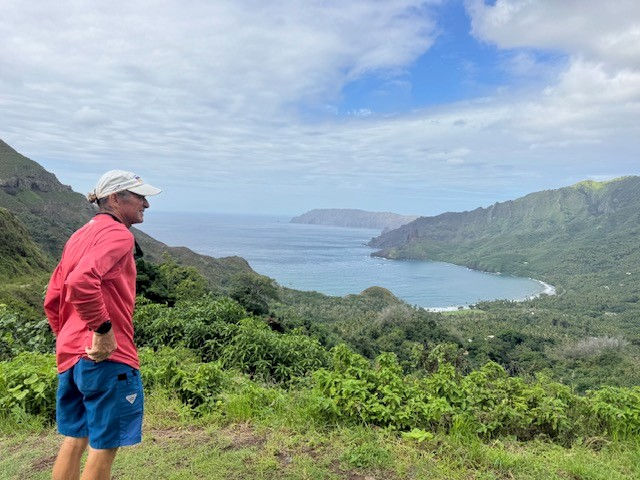


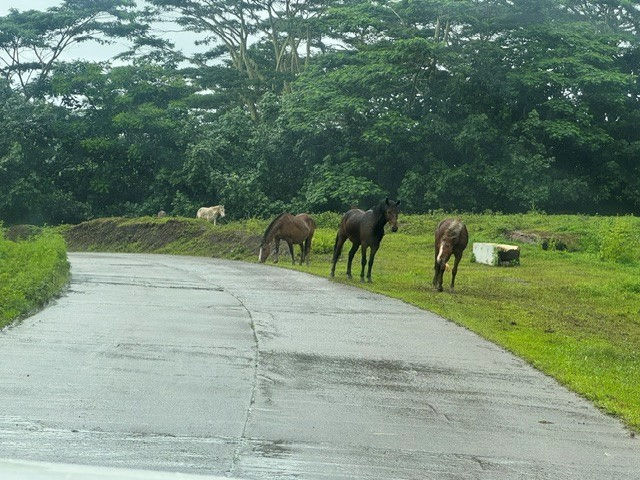


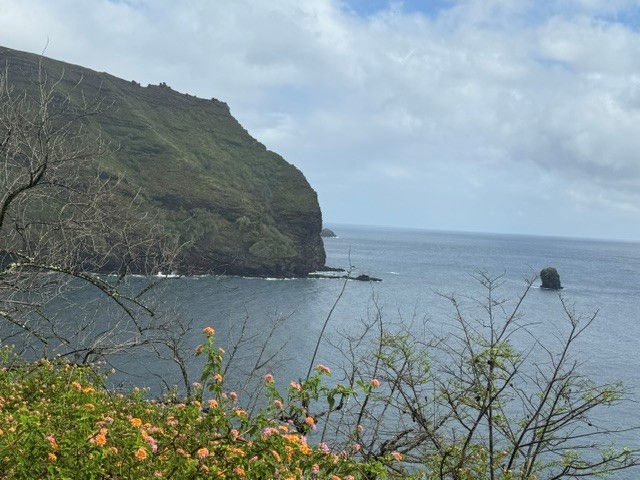


At Nuka Hiva we anchored in Taiohae Bay, the main anchorage close to stores, restaurants (few), and a ship chandlery, as well as the gen d'armes for paying trash and anchorage fees (60 cents per person per day). The town centered around the bay and was walking distance to everything, only about 5 miles around the whole bay. The bay was full of tikis and cultural items with an artisan shop to by local crafts. They had other activities including outrigger canoe races and a bocce ball tournament. We only stayed there a few days, long enough to get fresh produce and check the chandlery to order a new motor for our dinghy lift, but met several nice locals and cruisers there.




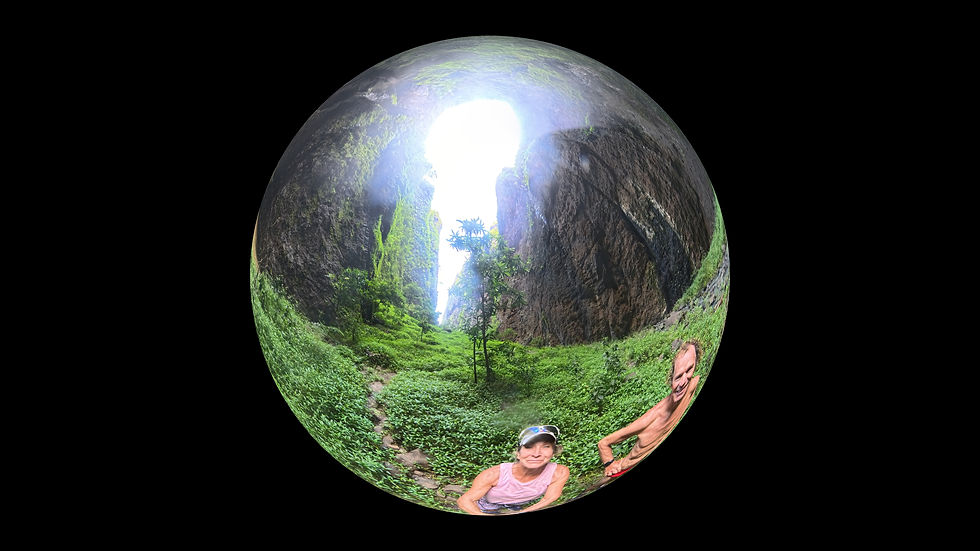

Our hikes often required sturdy footwear and a good level of fitness, but the islands’ natural beauty made every step worthwhile. These islands have wild goats and pigs, but no poisonous spiders and the only poisonous snakes here are the sea kraits and yellow-bellied sea snakes, which we did not encounter. We also did not encounter many mosquitos, but there were many bees and wasps, gnats and flies that made us happy that we had made screens for the boat windows!


Meeting the Local People and Their Generosity
One of the most memorable parts of our trip has been the warmth and generosity of the Marquesan people. Despite the islands’ remoteness, locals welcomed us with open arms, eager to share their culture and stories. "Kah- oh- ha" means "Hello", but they also respond to "Bonjour" which was easier for me to say. They would then invite us to their porch to chat, helping refresh my extensive training in French during primary school and college which has been negatively affected by my medical and conversational Spanish over the past years, and certainly our time in Panama, Dominican Republic, and even Bonaire.
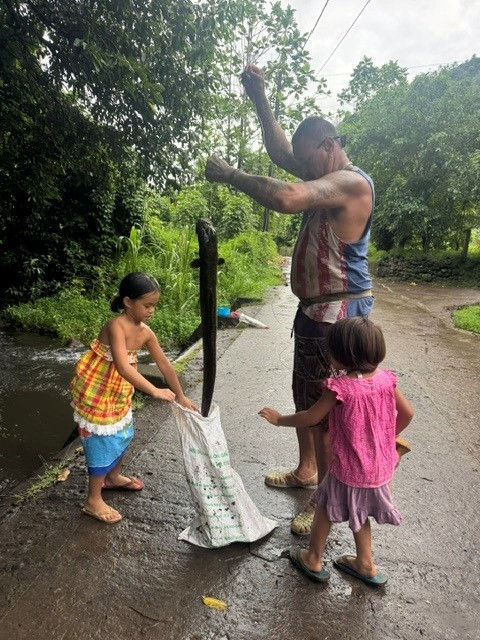
The locals all have nice gardens loaded with fruit trees: mango and avocado (out of season), papaya, grapefruit, bananas, passionfruit, lemons, noni, and Vi Tahiti, (Ambarella), coconut and dragonfruit. Locals gave us so much fruit, we were in heaven! Some of the bounty was interesting yellow papayas, huge bunches of bananas, lemons, passionfruits, and dozens of grapefruits. They wanted no money, for the most part, but did accept a pair of my "reader" glasses, a few pairs of cheap sunglasses, tooth brushes, bars of soap, a sarong, some costume/shell jewelry and some sunscreen and lip gloss for two little girls that I wanted to take home with me. We helped their father catch a big river eel (anguilla) which they planned to have for dinner.
In Fatu Hiva, we met Giles, a naturopathic doctor who practices traditional healing methods. Giles uses fermented Noni fruit combined with honey as part of a cancer treatment protocol. He offers his services pro bono to island residents, throughout French Polynesia, blending ancient knowledge with modern care. While this approach is based on local tradition and personal experience, it highlights the community’s commitment to health and well-being.
We had dinner with Poi, who contacted me about his nine year old son who had been bitten by a shark. The wound involved the area behind his knee, (politeal fossa), as well as his posterior thigh and his peroneal nerve was badly damaged, resulting in foot drop. I was able to tell him the symptoms and likely diagnosis and prognosis based on a picture of the bite wound, and help suggest appropriate neurosurgical evaluation. They actually have reasonably good medical care here in clinics on the larger islands with boat transport between islands, to Tahiti, and if necessary, to France. We were trying to help Poi raise money for a nerve transplant for his son, which is something rarely done in the US.
In Nuka Hiva, we met many people: Kua and Teiki prepared us lunch at their beach home and gave us pamplemousse, Monette spoiled us with lots of pamplemousse and a brief history of the island, and its people.


Other locals shared their crafts, music, and food, enriching our understanding of Marquesan culture beyond the usual tourist experience. We talked with Jean Ives the beach maintenance person and Fred, the owner of a small shop and car rental place who both live in the Puamau Bay area, one of the more remote bays in Hiva Oa. Fred spoke very good English and we were able to discuss politics and many other issues. They invited us back for the huge Christmas festival in their bay where many Pacific islanders come from as far as Hawaii and New Zealand to compete in Polynesian contests and enjoy huge feasts. This definitely would be a must-do event sometime! To celebrate Rob and my 20th anniversary, we had a proper Marquesan buffet dinner and show at Hanakee Lodge which was quite memorable. We attended with Jean Luis, a French sailor we had met in Panama over a month ago.


Snorkeling in Waters of Marquesas
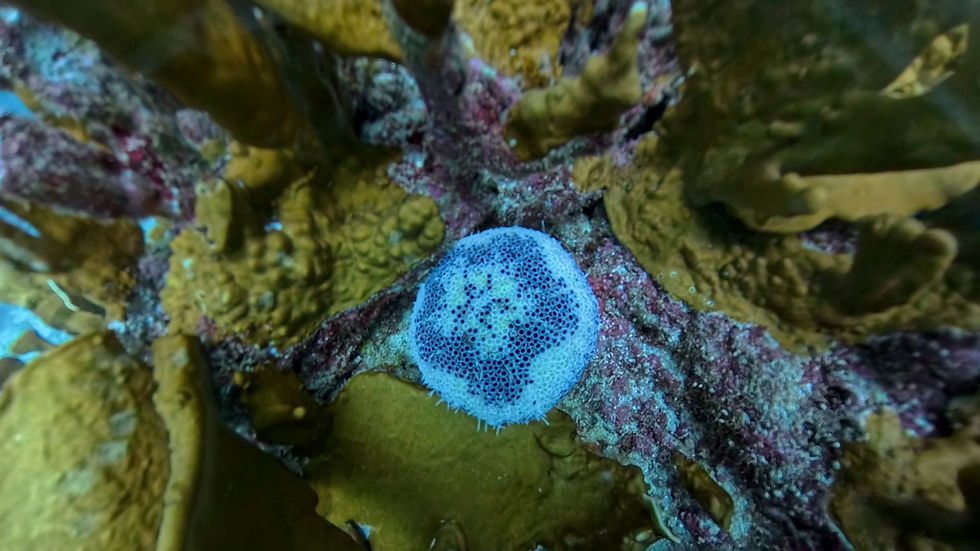
The Marquesas are less known for coral reefs compared to other parts of French Polynesia, but the underwater world is still rich and diverse. We snorkeled in several bays, including Daniel’s Bay and the Bay of Virgins, discovering colorful fish, sea turtles, many manta rays, and interesting rock formations. There was excellent coral development in Daniel's Bay, but for the most part more volcanic rock than coral. We spent over five minutes playing with a huge octopus that was not afraid of us. (Video and pics are on my Insta 360 camera which is not compatible with this website, but will try to convert r put on our Youtube channel). We did not spear-fish, so this is likely why we saw no sharks. Visibility was disappointing, but with the tannins from the river run off and black lava hills, it is not surprising.



While snorkeling gear can be rented on the larger islands, bringing your own ensures you are ready to explore at any moment. We did find a couple of dive shops on Nuka Hiva, but still had cruisers asking us to fill their dive tanks with our dive compressor. I trust our air quality!
Practical Travel Tips for Visiting the Marquesas
Airports: Only Nuku Hiva and Hiva Oa have airports with regular flights from Tahiti. Fatu Hiva and Tahuata require boat transfers.
Transportation: Inter-island travel is mostly by boat. Schedule trips carefully as services can be infrequent.
Accommodation: Options range from small guesthouses to eco-lodges. Booking in advance is recommended, especially in peak seasons.
Guides: Hiring local guides enhances hiking and cultural experiences while supporting the community.
Supplies: Bring essentials like hiking shoes, snorkeling gear, rain gear during rainy season (summer) and insect repellent. Shops on smaller islands have limited stock.
It often rains a bit every day during rainy season in Marquesas, but there are magnificent rainbows, and a pot of gold at the end of each one!

Highlights of Each Island Visited
Nuku Hiva: Known for its dramatic cliffs and Daniel’s Bay, it offers the best infrastructure and hiking opportunities. Some of the locals were less welcoming than on other islands, except in Daniel's Bay.(This was the only island where there were reports of theft of dinghies, engines, and lines, but the perpetrator was caught and it stopped).
Hiva Oa: Rich in history and culture, with museums and sites related to Paul Gauguin and Jacques Brel. Hikes are abundant but may require a car to access the best ones.
Tahuata: A peaceful island with traditional villages and beautiful bays, perfect for quiet exploration, clearer water for diving.
Fatu Hiva: The most remote and lush, featuring the Bay of Virgins and a strong connection to traditional Marquesan life.
Our journey through these islands revealed a side of French Polynesia that few travelers see, marked by raw landscapes, deep cultural roots, and genuine human connections. Every time we think we need to be moving on with our circumnavigation, we find one more reason to stay where we are, but finally we are now off to the Tuamotu Atolls, a four day sail away! Looking forward to much more diving, wing-foiling and kiteboarding, and cultural immersion...stay tuned!


Comments