Adventurous Journey to Hoffman Cay Blue Hole and Unexpected Cliff Dive Mishap


Exploring hidden natural wonders often brings unforgettable experiences, but sometimes those adventures come with unexpected challenges. Our recent hike into the interior of Hoffman Cay to reach the famous blue hole was one such journey. What started as an exciting exploration quickly turned into a dramatic moment when a simple walk under the cliffs led to a head injury. This story captures the thrill of discovery, the beauty of nature, and the importance of preparedness in remote locations.

Setting Out for Hoffman Cay Blue Hole
Hoffman Cay is known for its striking blue hole, a natural sinkhole filled with brackish water, nestled within rocky formations. Our group set out early in the day, eager to hike into the interior of the cay. The path was well-groomed, with areas of rock wall formations lining the path where a 1700 era homestead existed. We looked around for artifacts but found nothing significant.
The hike itself was a rewarding experience. There were minimal mosquitos, and the sound of waves crashing against the outer rocks provided a constant backdrop.

The Cliff Jump and Swimming Adventure
Upon reaching the blue hole, the first order of business was to take the plunge. The cliff overlooking the water was about 20 feet high, and the water below looked inviting. One by one, we jumped off the cliff into the cool brackish water. I am afraid of heights, but this was a shorter jump than ones I have taken canyoning and as a crazy teenager/young adult...but I forget my age often!


The water was refreshing, a mix of salt and freshwater that created a unique environment. We decided to swim around the entire perimeter of the blue hole to explore its hidden corners. The swim revealed fascinating marine life: a lone schoolmaster saltwater fish darted through the water. Along the edges, many soft brown flat mussels clung to the submerged rocks and mangrove roots, filtering the water silently.

Navigating Undercut Rock Formations
Hiking around the blue hole was not just about observing marine life. The undercut rock formations created natural arches and tunnels that we ducked under carefully. These formations made the hike both thrilling and challenging, requiring attention to avoid scraping against sharp edges.
Rob wore one of his typical triathlon hats to shield his face from the sun. Unfortunately, the hat obstructed his view as he maneuvered under one of the low rock arches. He misjudged the clearance and hit his head hard against the rock.
The Injury and Onboard Medical Response

The impact caused a deep gash on Rob’s forehead, and blood quickly began to flow. The injury was serious enough to require semi-immediate medical attention. Fortunately, our catamaran was anchored a half mile away and is equipped with a sterile(?) surgical suite and all the necessary gear to handle many emergencies.
We quickly moved Rob to the medical area on board. After cleaning the wound thoroughly, we administered local anesthesia and carefully sutured the gash with four stitches. The sterile environment and proper tools allowed us to manage the injury effectively, preventing infection and further complications.
Rob’s resilience was impressive. Despite the pain and shock, he remained calm throughout the procedure. Thanks to the prompt care, his modeling career was not at risk, and he was able to recover without lasting damage.
Lessons from the Hoffman Cay Adventure
This trip to Hoffman Cay’s blue hole was a vivid reminder of the unpredictable nature of outdoor adventures. Here are some key takeaways from our experience:
Preparation is crucial: Having a well-equipped medical kit and someone trained in first aid (hopefully not the injured person!) can make all the difference in emergencies.
Be mindful of your surroundings: Wearing gear that obstructs vision, like wide hats, can increase the risk of accidents in tight or rocky spaces.
Respect natural formations: Undercut rocks and cliffs can be beautiful but dangerous. Always assess the environment carefully before jumping or swimming near them.
Stay calm and act quickly: In case of injury, keeping a clear head and following proper medical protocols helps prevent complications.
Exploring Hoffman Cay and Neighboring Cays After Injuries
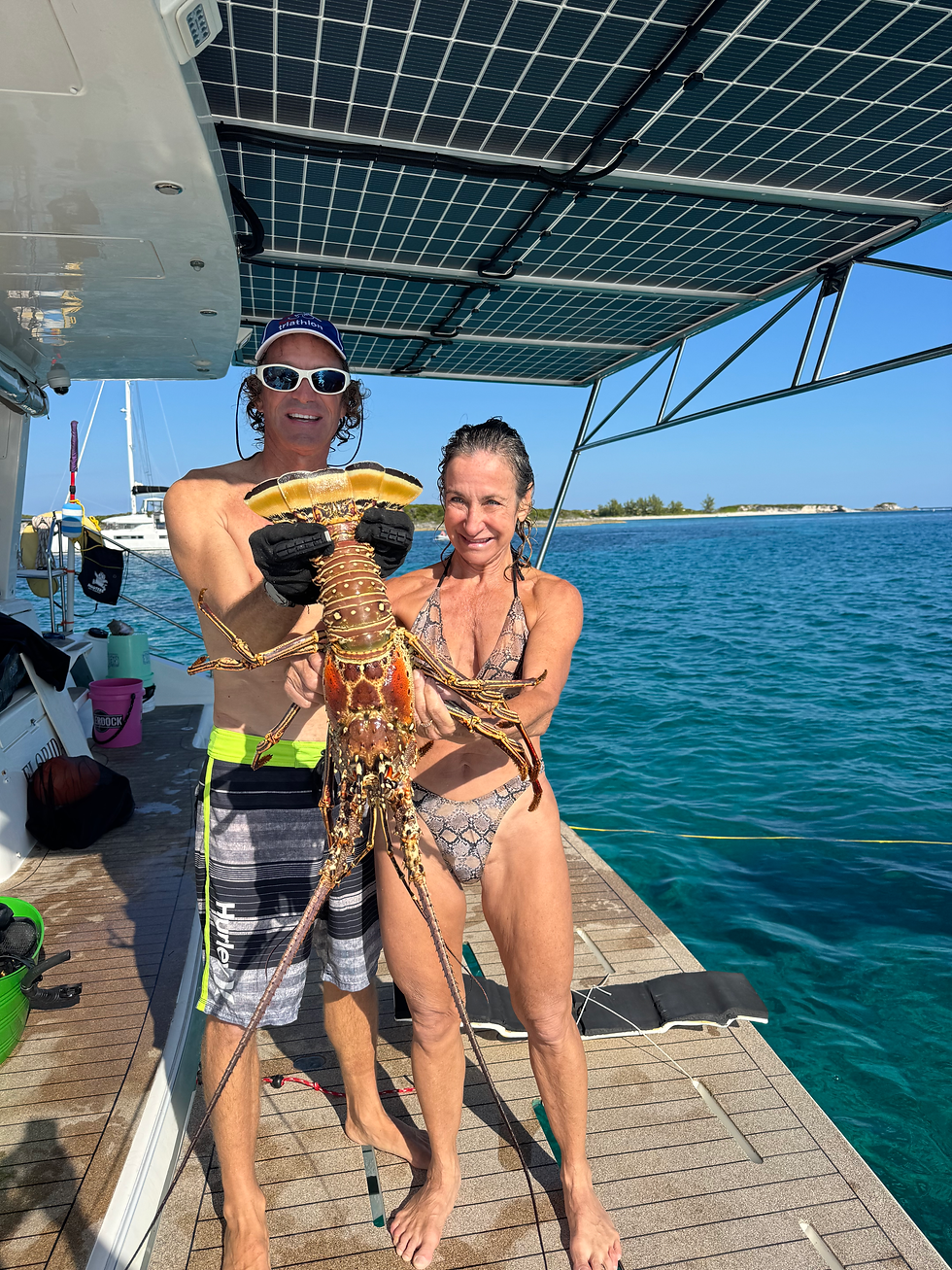
While the injury will keep Rob out of the water for a couple of days, we did not let a small head injury hinder our exploration of the rest of the neighboring islands and we hiked White Cay end-to-end. The sandy beach on one side of the island had perfect dingy access. We hiked up a well-worn path and jogged along the old limestone rocks, some of it a bit treacherous. The views of the cliffs and the ocean below were breath-taking! We could see where we had free-dived the day before and caught an 8# "Lobzilla"! This feat took Rob and me about fifteen minutes for me to get the lobster to come out of a deep hole so that Rob could grab him on the other side. Remember, no scuba, no nests, no spears, just gloved hands. Success takes teamwork!


We sail up to Stirrup Cay tomorrow when winds pick back up, and plan to explore the neighboring islands there: Devil's Cay and Fish Market Cay. If this kind of adventure appeals to you, get in touch with us and see about joining us for part of our trip. You'll be glad you did!


The water looks awesome!! Good thing there was a doctor onboard.
Colleen and I jumped into that blue hole in 1993. We were all through the Berry Islands, on a barefoot cruise, single hull, out of Miami. Looking forward to joining you guys in May!
Incredible photos, and this is just one of your first stops on the world tour. . .